
About
An SEO specialist who starts with the entity, not the keyword
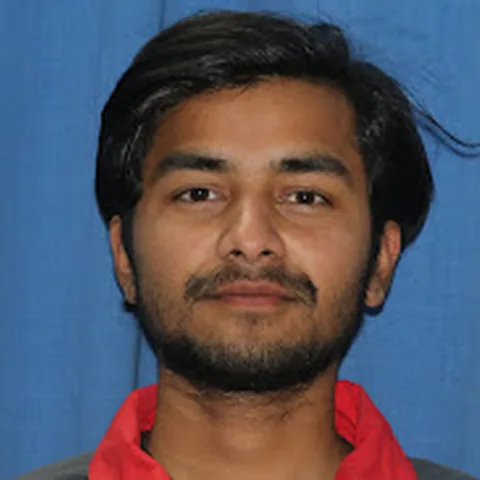
I'm Dil Bahadur B.K., a semantic SEO specialist from Kathmandu, Nepal. I plan websites around entities and topical maps, then build them on a base of technical, local, on-page and off-page SEO.
01 Story
From link building to semantic SEO
My SEO career started in December 2023 with data entry, Google stacking, citation building and link building for local SEO campaigns.
From there I moved through intern, executive and specialist roles. On live projects I learned keyword research, on-page optimization and technical fixes, managed Google Business Profiles for service businesses, and optimized e-commerce category and product pages.
Over time the work grew from tasks to strategy: building topical maps, working with developers and content teams, and owning projects end to end, from planning through execution and reporting.
Today I work as a semantic SEO specialist, remotely from Kathmandu, for e-commerce, B2B and local service brands. Before SEO, I earned a Diploma in Information Technology and trained in the React and Django frameworks, which still helps when I work with developers.
- Started in SEO
- 2023
- Industries
- 25+
- Projects running now
- 9
- Local service niches
- 12
- Nationwide niches
- 8
02 Credit
The mentor who showed me the right path
Anup Luintel is, in my view, one of the finest SEO strategists out there, someone who can build the right strategy for almost any niche.
When I started in SEO, I could complete tasks, but I didn't yet know how to think about search. Anup's guidance changed that. Learning from Anup showed me how to see a website as a whole, plan the strategy before the work, and judge ideas by evidence. That is where I found the right path, and much of how I approach SEO today grew from it.
I'm genuinely grateful for that guidance. Because of it, I can see where my career is heading, and it looks bright.
03 Where I work
Remote from Kathmandu, ranking in the US and beyond
Local time in Kathmandu:
Most of my current projects are businesses in the United States, alongside global e-commerce and industrial brands.
- Based in
- Kathmandu, Bagmati, Nepal
- Works
- Remotely, NPT (UTC+5:45)
- Current markets
- United States and global
- Search types
- Local, nationwide, e-commerce, B2B and AI search
04 Method
Map the entity first, then build the pages
Every site I plan starts as a map: the central entity, its attributes, and a decision for each one about whether it gets its own page.
- 01
Define the entity
Name the central entity and the source context: what the business is and how it earns.
- 02
List its attributes
Types, problems, costs, locations and brands: everything people search about it.
- 03
Page or section
An attribute gets its own page only with its own demand, intent and unique substance.
- 04
Link it together
Core pages earn, outer pages support them, and internal links connect both.
05 Research & method
Research and method behind the work
The ideas behind every strategy I write.
- 01
Search reads entities, not just words
I structure a site around its central entity and the attributes people search for, so its meaning is easy to understand.
- 02
The query is processed first
Search engines rewrite and expand a query before ranking anything. A page has to match the intent behind the words.
- 03
Every page has to earn its place
A topic gets its own page only when it has its own intent and enough substance. Otherwise it becomes a section.
- 04
One fact per sentence
Clear subject, predicate and object make each sentence easy for machines to parse, connect and quote.
- 05
Answer first
The first lines of a page or section answer its question. Background and detail come after.
- 06
Built for snippets and AI answers
Plain facts, clear lists and structured data make a passage easy to lift into a snippet or an AI answer.
- 07
Lower the cost of retrieval
Clean architecture, fewer thin pages and direct answers make a site cheaper to crawl and understand.
- 08
Go to the source
Google's patents and whitepapers explain the signals behind rankings better than most summaries of them.
- 09
Test before you trust
An SEO idea is a hypothesis until a controlled test shows it moves rankings.
06 Habits
How I work and keep learning
What I do every week to keep my SEO current and my calls grounded in evidence.
- 01
Follow the right experts for each vertical
Before I work in a new vertical, I decide which SEO experts and sources to follow for it.
- 02
Separate myths from facts with A/B tests
I run SEO A/B tests so decisions rest on results, not on popular claims.
- 03
Read official statements critically
Search engine statements are a source, not the final word. I check them against tests and data before relying on them.
- 04
Watch algorithm updates every day
I check volatility sensors such as Semrush Sensor and AccuRanker's Grump daily to spot updates early.
- 05
Analyze the SERP, then validate
I study the results page and the site, form an inference, and test it before calling it a finding.
- 06
Think like a search engine
I ask how a search engine would crawl, understand and rank a page, then plan the work around that.
- 07
Read patents, papers and official documentation
Search engine patents, research papers and official statements show where search is heading.
- 08
Keep learning code
I study front-end and back-end development, data science, machine learning and natural language processing.
- 09
Communicate clearly with clients
Clear, regular updates keep clients informed and projects on track, so I keep improving how I explain the work.
- 10
Read the SEO newsletters that matter
Newsletters such as SEOFOMO keep me current between projects.
07 Skills
Skills
Strategy
Technical & on-page
Local & off-page
AI search & scale
Research & measurement
Technical background
08 Credentials
Training & education
- Methodology
Topical Authority
Learned from Koray Tugberk Gubur
- Diploma
Information Technology
Nepal Banepa Polytechnic Institute
- Training
React & Django Framework
Broadway Infosys
09 Next
Want to work together?
Tell me about your site and where it's stuck. Email is the fastest way to reach me.